

Key Takeaways
- Self-Injury Awareness Day (SIAD), observed every year on March 1, aims to reduce stigma, increase understanding, and encourage people who self-harm to seek support.
- Self-injury is most often a coping response to overwhelming emotional pain, not attention-seeking behavior.
- Warning signs may include unexplained injuries, wearing long sleeves in warm weather, or withdrawing from loved ones.
- Recovery is possible with evidence-based treatment that addresses both self-harm behaviors and their underlying causes.
- Lifeline Behavioral Health offers compassionate, professional support for individuals struggling with self-harm, mental health conditions, and crisis situations.
What Is Self-Injury Awareness Day (March 1)?
If you’re reading this because you self-harm, or because you’re worried about someone you love, you are not alone. Self-Injury Awareness Day exists because many people carry this struggle in silence, and that silence can make it harder to reach out for help.
Observed internationally each year on March 1, Self-Injury Awareness Day is a global effort to educate the public about self-harm, challenge harmful stereotypes, and create space for honest conversations about recovery. It speaks both to individuals who self-injure and to the friends, family members, and supporters who care about them.
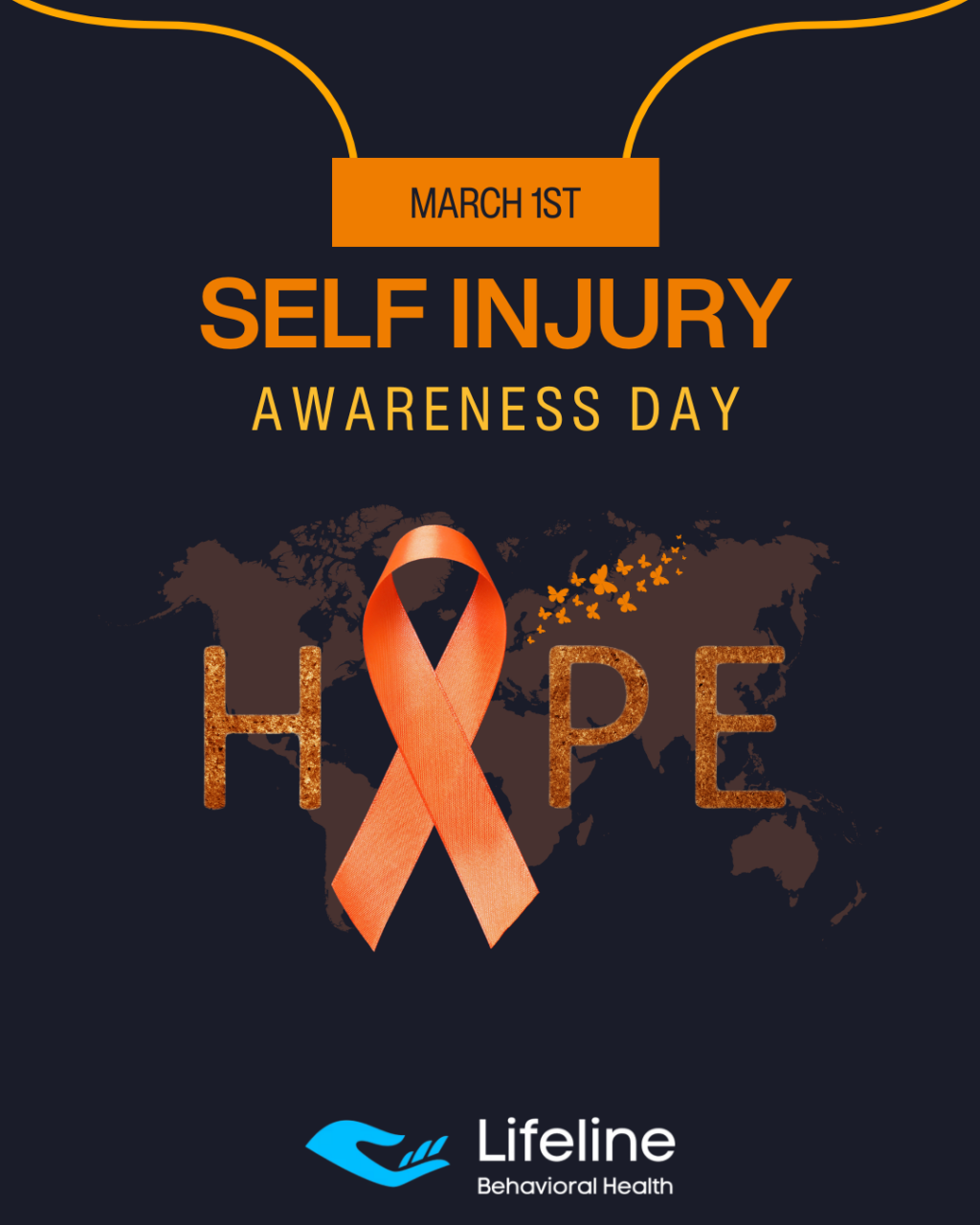
The orange ribbon is the universal symbol of self-injury awareness, representing hope and understanding for a behavior that is often misunderstood. Wearing orange or white wristbands is one way people show solidarity and signal non-judgmental support.
Self-injury, also referred to as self-harm or non-suicidal self-injury (NSSI), involves intentional physical harm used to cope with emotional distress. It can affect people of any age, including adults. According to the World Health Organization, self-harm impacts approximately 14.6 million people worldwide each year.
Self-Injury Awareness Day matters because stigma and shame often prevent people from seeking help. Recognizing self-harm and talking about it openly can be a meaningful first step toward healing.
Understanding Self-Injury: What It Is and What It Is Not
Self-injury is a coping strategy for intense emotions. It is not a character flaw, a sign of weakness, or a failure of willpower. This distinction is critical for individuals trying to understand their own behavior and for those supporting someone they care about.
Common Forms of Self-Injury
People may engage in behaviors such as:
- Cutting the skin with sharp objects
- Burning
- Scratching or picking at skin
- Hitting or punching oneself
- Head banging
- Interfering with wound healing
- Ingesting harmful substances when not part of a suicide attempt
Self-injury can occur alongside suicidal thoughts, but many individuals who self-harm are trying to manage emotional pain rather than end their lives. Regardless of intent, all self-harm behaviors deserve attention and care.
Dispelling Common Myths
| Myth | Reality |
| “It’s just for attention” | Self-injury is usually done privately to cope with distress |
| “Only teenagers self-harm” | Adults of all ages self-harm, often alongside trauma, addiction, or mental health conditions |
| “If it isn’t severe, it doesn’t count” | Any self-harm signals real emotional pain |
| “People who self-harm are manipulative” | Self-harm is driven by distress, not manipulation |
Self-injury often reflects deeper challenges such as depression, anxiety, trauma, or substance use disorders. These conditions are treatable with professional support.
Warning Signs and Risk Factors of Self-Injury
Self-harm is often hidden, but there are physical, emotional, and behavioral signs that may indicate someone is struggling.
Physical Warning Signs
- Frequent unexplained injuries or bandages
- Wearing long sleeves or pants in warm weather
- Avoiding activities that expose skin
- Wounds at different stages of healing
- Possession of sharp objects without clear purpose
Emotional and Behavioral Indicators
- Sudden mood changes
- Intense self-criticism
- Withdrawal from loved ones
- Increased secrecy or defensiveness
- Difficulty expressing emotions
Risk Factors
- Trauma or abuse history
- Bullying or social isolation
- Perfectionism and low self-esteem
- LGBTQ+ stressors
- Substance use
- Co-occurring mental health conditions such as depression, anxiety, PTSD, bipolar disorder, or eating disorders
If you notice these signs, approach with curiosity and care rather than assumptions. A gentle check-in can open the door to support.
At Lifeline Behavioral Health, clinicians are trained to assess for self-harm as part of a comprehensive mental health evaluation, ensuring care begins with compassion and discretion.
Emotional Distress, Mental Health, and the Role of Self-Injury
Self-injury often serves a short-term purpose, such as reducing emotional intensity, creating a sense of control, or expressing distress when words feel inaccessible. While it may offer brief relief, it frequently leads to guilt, shame, and stronger urges over time.
The Self-Harm Cycle
- Emotional distress builds
- Self-harm is used to cope
- Temporary relief occurs
- Shame or fear follows
- Distress increases again
Breaking this cycle typically requires professional support and new coping strategies.
Self-injury commonly co-occurs with depression, anxiety, trauma-related disorders, bipolar disorder, and substance use disorders. Integrated treatment approaches that address both emotional distress and behavior patterns are often the most effective.
How to Respond If You Self-Harm or Are Worried About Someone
If You Self-Harm
You don’t need to take a dramatic step to begin seeking help. Small actions can make a difference:
- Tell one trusted person
- Write down what you’re experiencing
- Schedule an appointment with a mental health provider
- Reach out to Lifeline Behavioral Health for confidential guidance
Therapy can help you develop alternatives to self-harm, such as grounding techniques, distress-tolerance skills, creative expression, or reaching out for support during difficult moments.
If You’re Worried About Someone
Helpful responses include:
- Listening calmly
- Validating their experience
- Encouraging professional support
- Offering practical help
Avoid shaming, ultimatums, minimizing their pain, or reacting with panic.
When Immediate Help Is Needed
If there is immediate danger:
- Call 911 or go to the nearest emergency room
- Contact the 988 Suicide & Crisis Lifeline (call or text 988)
- Reach out to Lifeline Behavioral Health (480) 530-7581 for urgent support
Treatment Options: How Professional Help Can Break the Cycle
Self-injury is treatable. Recovery focuses on safety, emotional regulation, and addressing underlying mental health conditions.
Evidence-Based Therapies
- Cognitive Behavioral Therapy (CBT)
- Dialectical Behavior Therapy (DBT)
- EMDR for trauma-related self-harm
- Acceptance and Commitment Therapy (ACT)
Levels of Support
Care is matched to individual needs and may include:
- Outpatient therapy
- Intensive outpatient services
- Crisis stabilization and coordinated referrals when higher levels of care are needed
Lifeline Behavioral Health helps individuals understand their options and connect with appropriate services based on safety, symptoms, and personal circumstances.
How Lifeline Behavioral Health Can Help
Lifeline Behavioral Health provides compassionate mental health care for individuals experiencing self-harm urges, suicidal thoughts, or overwhelming emotional distress. Our team offers assessments, crisis support, and ongoing therapy focused on safety, stabilization, and long-term healing.
If you or someone you love is struggling, you do not have to navigate this alone. Reaching out can be the first step toward relief and recovery.
A Final Word on Self-Injury Awareness Day
Self-Injury Awareness Day is about more than recognition. It is an invitation to choose connection over silence and understanding over judgment. Whether you are seeking help for yourself or supporting someone else, even a small step toward care matters.
If you need support, Lifeline Behavioral Health is here.