


Your nervous system constantly scans your environment for safety or danger. When it senses a threat, your body activates survival responses designed to protect you.
However, when stress or trauma occurs repeatedly, your nervous system may remain stuck in a defensive state. Instead of returning to calm after a stressful moment, your body may stay in a pattern of anxiety, emotional overwhelm, or exhaustion.
This is where nervous system regulation therapy becomes important. These therapies help your brain and body relearn how to shift out of survival mode and return to a state of balance and safety.
For people living with chronic stress, anxiety, trauma, or emotional dysregulation, learning how to regulate the nervous system can be a key step toward healing.
What Is Nervous System Regulation Therapy?
Nervous system regulation therapy refers to therapeutic approaches that help the body move out of chronic stress responses and restore balance within the nervous system.
When the nervous system becomes dysregulated, it may remain stuck in survival states such as:
- Fight-or-flight, which may cause anxiety, panic, or hypervigilance
- Freeze or shutdown, which may cause fatigue, numbness, or depression
Regulation therapies help your brain and body return to a stable state by combining body-focused techniques and cognitive therapies.
Common approaches may include breathwork, grounding exercises, somatic awareness, trauma-informed therapy, mindfulness practices, and evidence-based psychological treatments.
What Does a Dysregulated Nervous System Feel Like?
When your nervous system is dysregulated, your body may respond to everyday situations as if they are threats.
You might experience symptoms such as:
- Persistent anxiety or feeling constantly on edge
- Panic attacks or sudden surges of fear
- Difficulty sleeping or relaxing
- Emotional overwhelm or irritability
- Brain fog or trouble concentrating
- Feeling emotionally numb or disconnected
- Chronic muscle tension or fatigue
These experiences often occur when your body has been exposed to chronic stress, trauma, or overwhelming life events.
Over time, the nervous system can become conditioned to stay in a defensive state, even when you are safe.
The Three Nervous System States (Polyvagal Theory)
Polyvagal Theory explains that the nervous system moves between three main states that influence how you feel and respond to the world.
Safe and Social State
When your nervous system is regulated, you feel calm, connected, and able to think clearly. Your body feels relaxed and your emotions are more balanced.
Fight-or-Flight State
In this state, your body prepares to respond to danger. You may feel anxious, restless, or overwhelmed. Your heart rate may increase and your mind may race.
Shutdown or Freeze State
If stress becomes overwhelming, the nervous system may move into a shutdown state. This can feel like emotional numbness, exhaustion, or disconnection.
Nervous system regulation therapy helps the body move out of defensive states and return to the safe, regulated state where healing and stability are possible.
How Stress and Trauma Affect the Nervous System
Your nervous system releases hormones like cortisol and adrenaline when it detects danger.
These hormones increase heart rate, sharpen attention, and prepare the body to respond quickly.
But when stress becomes chronic, this system may remain activated for too long. Research from Harvard Health Publishing shows that long-term stress can affect emotional regulation, brain function, and physical health.
Trauma can also disrupt how the brain interprets safety. This is why trauma-informed therapies often focus on helping the nervous system relearn how to recognize safe environments.
How Do You Fix a Dysregulated Nervous System?
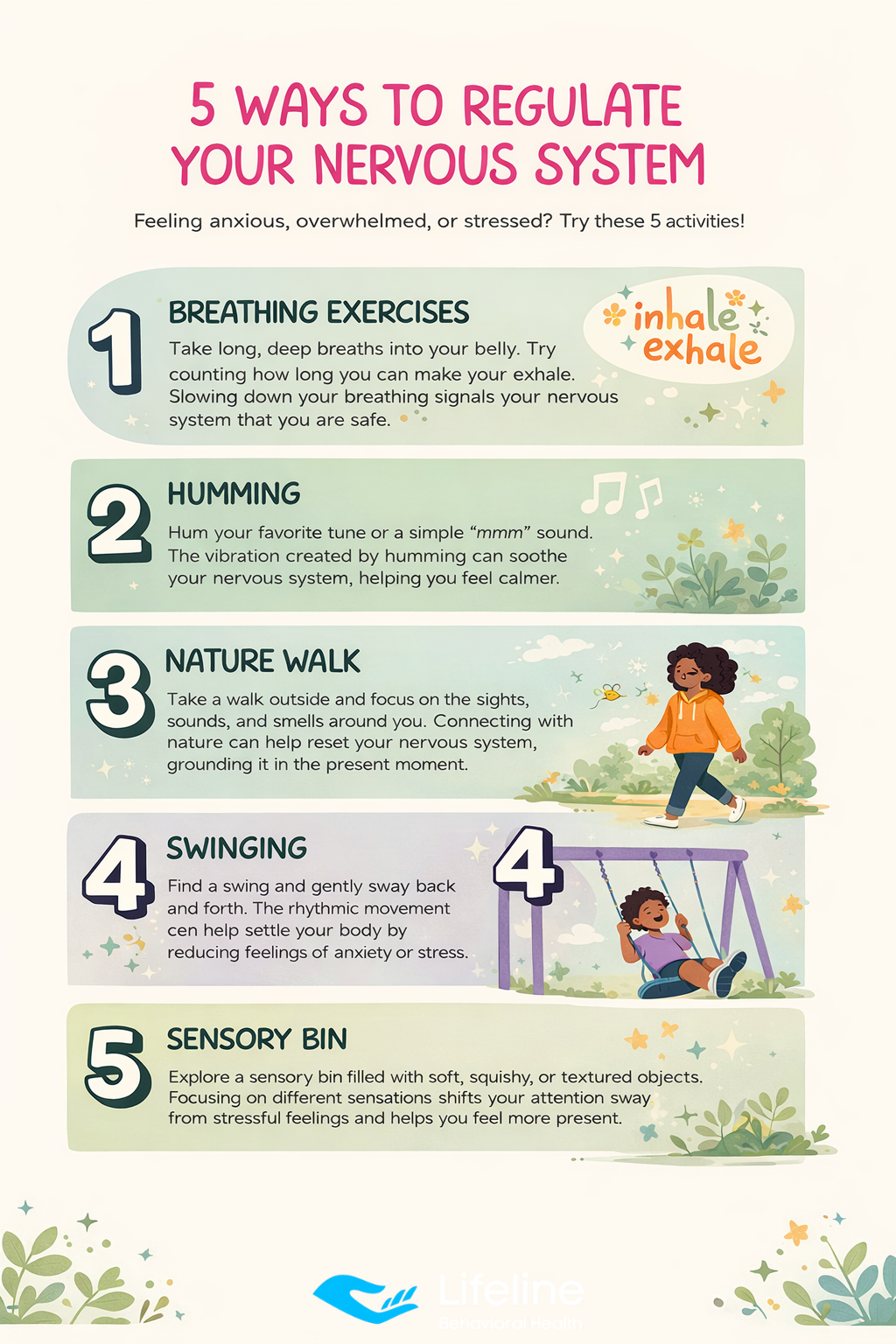
A dysregulated nervous system can begin to stabilize through practices that signal safety to the brain and body.
Several techniques can support this process.
Slow Breathing
Deep diaphragmatic breathing activates the vagus nerve and helps shift the body into a calm state.
Grounding Techniques
Exercises such as the 5-4-3-2-1 grounding method help bring attention back to the present moment.
Physical Movement
Walking, stretching, or gentle yoga can release stored stress energy.
Supportive Social Connection
Positive interactions with trusted people can help the nervous system recognize safety.
Therapy
Working with a licensed therapist can help address underlying trauma, anxiety, or chronic stress that contributes to nervous system dysregulation.
Therapies That Support Nervous System Regulation
Several evidence-based therapies can help regulate the nervous system and restore emotional balance.
EMDR Therapy (Eye Movement Desensitization and Reprocessing)
EMDR is an evidence-based trauma therapy designed to help the brain process distressing memories that may keep the nervous system stuck in survival responses.
During EMDR therapy, guided eye movements or other forms of bilateral stimulation help the brain reprocess traumatic memories so they no longer trigger the same emotional and physical reactions.
Research shows EMDR can significantly reduce trauma symptoms and support nervous system regulation.
Somatic Experiencing
Somatic therapies focus on the connection between the body and emotional experiences. These approaches help release tension and stored stress within the nervous system.
Cognitive Behavioral Therapy (CBT)
CBT helps individuals identify and change thought patterns that trigger stress responses, helping the nervous system respond more calmly to challenges.
Dialectical Behavior Therapy (DBT)
DBT teaches skills for emotional regulation, distress tolerance, and mindfulness that can help stabilize nervous system responses.
Daily Nervous System Regulation Habits
While therapy is important for deeper healing, daily habits can also support nervous system balance.
Maintain Consistent Sleep
Regular sleep helps regulate cortisol levels and improves emotional stability.
Check In With Your Body
Brief pauses throughout the day to notice your breathing or muscle tension can help reset the nervous system.
Limit Chronic Stress Exposure
Setting boundaries with overwhelming commitments or digital overload can reduce constant nervous system activation.
Move Your Body
Daily movement helps release stress hormones and improves mood.
Practice Mindful Breathing
Even one minute of slow breathing can help calm the nervous system.
When to Seek Nervous System Regulation Therapy
Self-regulation techniques can be helpful, but some patterns of dysregulation require professional support.
You may benefit from therapy if you experience:
- Chronic anxiety or panic attacks
- Trauma symptoms
- Persistent emotional overwhelm
- Difficulty feeling calm or safe
- Stress that interferes with daily functioning
Working with a therapist can help your nervous system gradually learn healthier patterns.
Support Is Available at Lifeline Behavioral Health
If stress, trauma, or emotional overwhelm are affecting your daily life, you do not have to navigate it alone.
At Lifeline Behavioral Health, counseling services are designed to help individuals understand how stress and trauma affect the nervous system and develop practical skills that restore emotional balance.
With multiple treatment options available, including in-person counseling and telehealth therapy, Lifeline Behavioral Health provides flexible support that fits your life and schedule.
Taking the first step toward therapy can help your nervous system recover and support long-term emotional well-being.
Frequently Asked Questions About Nervous System Regulation Therapy
How do you fix a dysregulated nervous system?
A dysregulated nervous system can improve through techniques such as slow breathing, grounding exercises, physical movement, supportive relationships, and therapy that helps process stress and trauma.
What are common nervous system disorders?
Conditions connected to nervous system dysregulation may include anxiety disorders, PTSD, panic disorder, and trauma-related stress responses.
How do you stop feeling dysregulated?
Practices such as breathwork, grounding techniques, mindfulness, and movement can help calm the nervous system. Therapy can also address underlying trauma or chronic stress.
How do you recover your central nervous system from stress?
Recovery involves reducing chronic stress, improving sleep and lifestyle habits, practicing regulation techniques, and seeking therapy when symptoms persist.
Can therapy help regulate the nervous system?
Yes. Therapies such as EMDR, trauma-informed therapy, CBT, and somatic approaches can help retrain the nervous system and improve emotional regulation.