


Children’s Mental Health Awareness Month is recognized each May to bring attention to the emotional, behavioral, and psychological well-being of children and teens. It is a reminder that mental health deserves the same care and attention as physical health.
For many Arizona families, this topic is deeply personal. A child may seem more anxious, shut down, irritable, overwhelmed, withdrawn, or emotionally reactive than usual. Sometimes the signs are obvious. Sometimes they show up more quietly through school struggles, sleep changes, social withdrawal, or a sudden loss of confidence.

Awareness matters because early recognition and support can help prevent more serious issues later. About 1 in 5 children experience a mental health disorder each year.
Awareness efforts also encourage greater understanding, acceptance, and access to support for children and teens.
At Lifeline Behavioral Health, we understand that parents do not always need more pressure. They need clarity, support, and a place to start.
Acknowledging Children’s Mental Health Awareness Month
Each May, Mental Health Awareness Month shines a spotlight on the importance of mental health for people of all ages, especially children and adolescents. It is an opportunity to raise awareness, encourage open conversations, and help families recognize when support may be needed.
Mental health awareness is an important part of a child’s healthy development. When families talk openly about mental health, it becomes easier to reduce stigma and seek help sooner. Early recognition of warning signs such as persistent sadness, anxiety, or noticeable behavior changes can make a meaningful difference in a child’s well-being.
Parents, caregivers, and healthcare providers all play an important role in supporting children’s mental health. Mental Health Awareness Month is a reminder that emotional health matters just as much as physical health, and that every child deserves support, understanding, and hope.
Why Children’s Mental Health Matters So Much
Mental health affects how children handle stress, connect with others, process emotions, make choices, and function at home and at school. When a child is struggling emotionally, it can affect nearly every part of daily life.
Children’s mental health is not only about diagnosis. It is also about resilience, emotional safety, healthy development, and the ability to cope with change, pressure, disappointment, fear, and uncertainty.

Many children manage daily challenges with the support of parents, caregivers, teachers, friends, and other trusted adults. That support matters. Feeling seen, safe, and understood matters.
For some children and teens, though, support at home and school may not be enough on its own. When emotional or behavioral symptoms begin to last longer, intensify, or interfere with daily life, professional care can make a meaningful difference.
What Arizona Families Should Know
This issue is especially important in Arizona.
Across the state, families are seeing the effects of anxiety, depression, trauma, social pressure, academic stress, and emotional overload in children and adolescents. Young people are often navigating school expectations, family stress, social comparison, identity development, peer conflict, and constant digital exposure all at once.
That makes Children’s Mental Health Awareness Month especially relevant for Arizona parents who want to understand what is normal, what may be a sign of something deeper, and when extra support may help.
At Lifeline Behavioral Health, care for adolescents is built around the reality that young people are still developing emotionally, socially, and neurologically. Their symptoms may not look the same as adult symptoms, and their treatment should not feel one-size-fits-all.
Signs a Child or Teen May Be Struggling
Recognizing changes in behavior is essential for early intervention and lasting support. A child or teen may need extra support if you notice:
- Ongoing sadness or frequent tearfulness
- Irritability, anger, or emotional outbursts
- Increased worry, panic, or fear
- Pulling away from family or friends
- Falling grades or trouble concentrating
- Changes in sleep, appetite, or energy
- Low motivation or loss of interest in favorite activities
- Physical complaints tied to stress, like headaches or stomachaches
- Risky behavior or early substance use
- Harsh self-talk, shame, or low self-worth
- Feeling overwhelmed by everyday responsibilities
Parents often sense that something is off before they have a clear explanation for it. That instinct matters. A child does not need to be in full crisis before support becomes appropriate.
What Mental Health Struggles Can Look Like in Children and Teens
Children and teens do not always say they are depressed or anxious. Often, they show it through behavior.
An anxious child may become avoidant, clingy, perfectionistic, or physically sick before school. A depressed teen may seem angry, numb, exhausted, detached, or uninterested in things they once cared about. A child dealing with trauma may become hypervigilant, reactive, emotionally shut down, or highly sensitive to stress.
Mental health symptoms in young people can affect:
- School performance
- Behavior at home
- Friendships
- Self-esteem
- Emotional regulation
- Sleep routines
- Motivation
- Family communication
That is why it helps to look at the full picture, not just one behavior in isolation.
Trauma-Informed Care Matters
Trauma-informed care is an important part of supporting children and teens.
Not every child who is struggling has experienced trauma, but many children carry stress, fear, grief, instability, or painful experiences that affect how they respond to the world around them. Trauma-informed care recognizes that what looks like defiance, emotional volatility, shutdown, avoidance, or overreaction may actually be a stress response.
A trauma-informed approach helps create a safe, supportive environment for children, teens, families, and providers. It starts with asking deeper questions instead of making quick assumptions.
At Lifeline Behavioral Health, trauma-informed care means looking beyond surface behavior and understanding the emotional context underneath it. It also means helping families respond in ways that support safety, trust, collaboration, and growth.
Stress and Trauma Are Not Always the Same
Children experience stress every day. Some stress is normal and manageable. Trauma is different.
Trauma tends to overwhelm a child’s sense of safety or ability to cope. That may come from one major event or repeated experiences over time. Understanding the difference matters because a child carrying trauma may need more than basic encouragement or behavior correction. They may need support that helps them feel emotionally safe enough to process what they are carrying.
This is one reason personalized care matters so much. At Lifeline Behavioral Health, treatment is designed around the individual child or teen, not just the visible symptoms.
How Parents Can Support a Child’s Mental Well-Being at Home
Parents often ask what they can do now, before or alongside counseling.
A few meaningful ways to support mental well-being include:
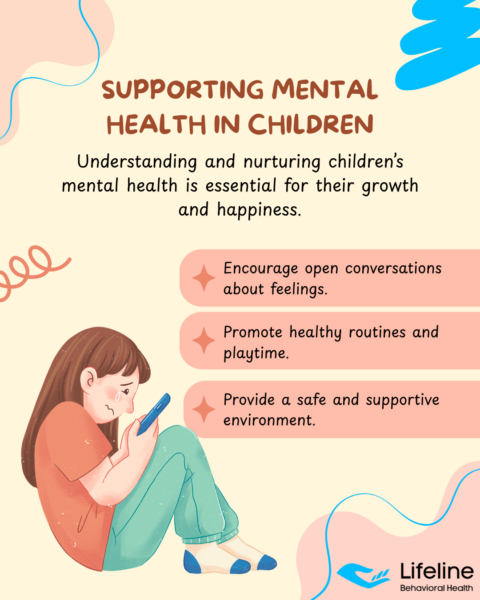
- Creating a home environment where emotions can be talked about openly
- Reassuring your child that it is okay to feel sad, angry, anxious, confused, or overwhelmed
- Listening without interrupting or rushing to fix everything immediately
- Encouraging self-care practices as part of mental wellness
- Acknowledging what is going well, not just what needs to change
- Modeling healthy emotional expression and calm communication
- Protecting time for play, rest, creativity, and connection
- Practicing gratitude and helping children notice what is good
- Noticing patterns in sleep, behavior, social withdrawal, and stress tolerance
- Helping your child feel supported rather than judged
Children learn by example. When adults express emotions in healthy ways, children are more likely to build those same skills. Creating a safe and supportive environment for honest conversation is one of the strongest protective factors a family can offer.
Promoting Mental Well-Being in Schools and Communities
Supporting children’s mental health is a community effort, and schools are a major part of that support. When mental health education is part of the conversation, students can better understand their emotions, recognize challenges, and know how to seek help. A culture of awareness encourages open conversations, reduces stigma, and helps students feel less alone.
Communities also play an important role. Local organizations, healthcare providers, and child welfare professionals can offer resources, host awareness events, and support families facing mental health or behavioral health concerns.
By working together, families, schools, healthcare providers, and community organizations can create a more supportive environment where children’s mental health is taken seriously.
Social Pressures Are Affecting Children’s Mental Health
Children and teens today are growing up in a world with constant stimulation, social comparison, academic pressure, and digital stress. Many feel pressure to perform, appear okay, keep up socially, or stay constantly connected.
Emotional overload can build quickly, especially when pressure comes from multiple directions at once:
- School expectations
- Friendship dynamics
- Social media exposure
- Family stress
- Identity-related struggles
- Fear of falling behind
- Constant comparison
This is one reason open dialogue at home matters so much. When kids know they can talk honestly without being dismissed or judged, it becomes easier to recognize problems early.
Support From Lifeline Behavioral Health
If your child’s symptoms are lasting, worsening, or affecting daily life, counseling may help them build insight, coping skills, emotional regulation, and stronger communication.
Adolescent Counseling at Lifeline Behavioral Health supports teens facing anxiety, depression, trauma, bullying, family conflict, identity-related stress, and early substance use.
For adolescents who need more structure, the GRASP Program for Adolescents offers a more comprehensive and flexible level of support that may include individual therapy, group support, family involvement, and outpatient or intensive outpatient care.
This allows treatment to match the teen, rather than forcing the teen to fit a rigid model.
Children’s Mental Health Awareness Month is a valuable reminder, but for many families, this is not just a conversation for May. It is part of daily life. If your child or teen has been struggling emotionally, behaviorally, socially, or academically.
Lifeline Behavioral Health offers compassionate, personalized support designed to help young people feel more understood, more equipped, and less alone in what they are facing.