

Children often develop routines, preferences, and habits as they grow, but OCD symptoms in children can look very different from typical developmental behaviors. Many of these behaviors are completely normal and part of learning how to navigate the world.
However, when certain thoughts or behaviors become persistent, distressing, and difficult for a child to control, they may be signs of Obsessive-Compulsive Disorder (OCD).
OCD is a mental health condition that can affect both children and adults. When it begins in childhood, symptoms often appear between ages 8 and 12, though they can develop earlier or during adolescence.
Understanding the symptoms of OCD in children can help parents recognize when their child may benefit from additional support.
What Are OCD Symptoms in Children and How Do They Appear?
OCD symptoms in children typically involve two types of experiences:
Obsessions – intrusive thoughts, fears, or mental images that cause anxiety.
Compulsions – repetitive behaviors or rituals performed to reduce the anxiety caused by those thoughts.
Children with OCD often feel unable to stop these behaviors, even when they realize the fears may not make sense. These patterns are central to understanding OCD symptoms in children and how they impact daily life.
According to the International OCD Foundation, OCD affects approximately 1 in 200 children, meaning thousands of families navigate this condition each year.
Common Obsessions in Children With OCD
Obsessions are intrusive thoughts that repeatedly enter a child’s mind and cause distress and are a core part of OCD symptoms in children. These thoughts are not simply worries; they are persistent and difficult for the child to control.
Common obsessive thoughts may include:
- Fear of germs, contamination, or illness
- Worry that something bad will happen to family members
- Fear of making mistakes or doing something wrong
- Disturbing thoughts about harm or violence
- Intense need for things to feel “just right”
- Fear of losing or forgetting important items
These thoughts often create significant anxiety and can feel frightening or confusing for children.
Common Compulsions in Children
Compulsions are repetitive behaviors children perform in order to relieve anxiety caused by obsessive thoughts.
While these rituals may temporarily reduce stress, the relief often does not last long.
Examples of compulsions include:
- Excessive handwashing or cleaning
- Repeatedly checking doors, homework, or belongings
- Arranging objects until they feel “perfect”
- Repeating words, prayers, or counting silently
- Asking parents the same reassurance questions repeatedly
- Erasing and rewriting schoolwork multiple times
These behaviors can become time-consuming and difficult for children to stop without support.
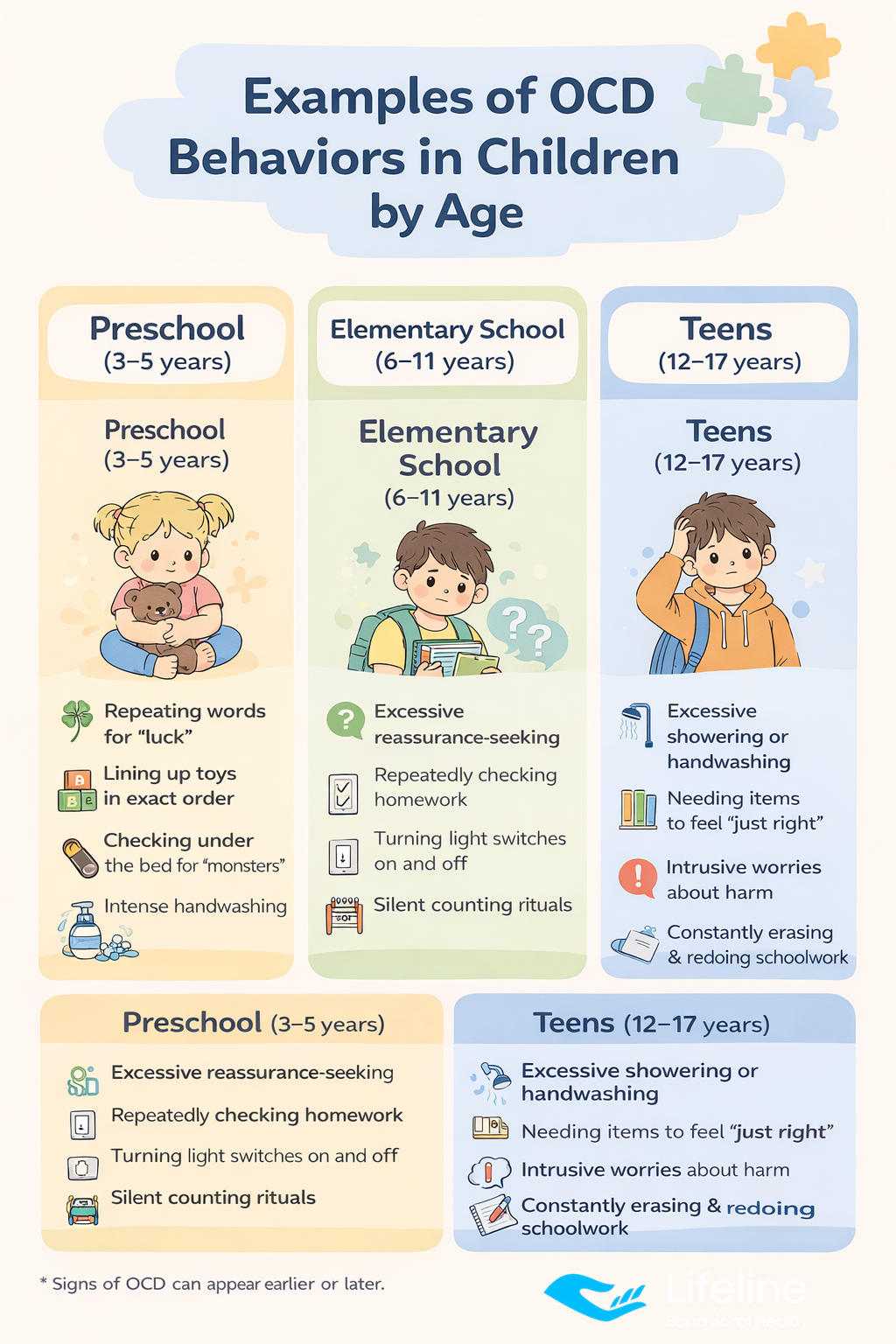
Examples of OCD Behaviors in Children by Age
OCD symptoms in children can present differently depending on age and developmental stage. The examples below show how obsessive thoughts and compulsive behaviors may appear at different ages.
Signs OCD May Be Affecting Your Child’s Daily Life
Many children develop routines, but OCD symptoms become concerning when they interfere with normal daily functioning.
Parents may notice:
- Rituals or behaviors taking more than one hour each day
- Difficulty completing schoolwork due to repeated checking
- Anxiety or distress when routines are interrupted
- Avoiding places or situations that trigger fears
- Emotional outbursts related to anxiety
- Trouble sleeping due to intrusive thoughts
When these symptoms begin affecting school, friendships, or family life, it may be helpful to seek professional guidance.
What Causes OCD in Children?
Researchers believe OCD develops from a combination of biological and environmental factors.
Brain Function
Certain differences in brain circuits related to fear and decision-making may contribute to OCD symptoms.
Genetics
Children with family members who have OCD or anxiety disorders may have an increased risk.
Stressful Life Events
Major life changes or stress can sometimes trigger or intensify symptoms.
Personality and Temperament
Children who are naturally perfectionistic or highly sensitive may be more vulnerable to obsessive thinking patterns.
Understanding these factors can help parents recognize that OCD is not caused by parenting or discipline.
How Therapy Helps Children With OCD
Early treatment can significantly improve outcomes for children experiencing OCD symptoms.
One of the most effective treatments is Cognitive Behavioral Therapy (CBT), particularly a technique called Exposure and Response Prevention (ERP).
ERP helps children gradually face fears while learning that anxiety decreases without performing compulsive rituals.
Therapy can help children:
- Understand intrusive thoughts
- Reduce compulsive behaviors
- Develop confidence managing anxiety
- Build healthier coping strategies
Specialized mental health programs designed for adolescents can also provide structured support during this process. Programs such as the GRASP program for adolescents help teens develop emotional regulation and resilience skills in a supportive environment.
Support for Children and Teens at Lifeline Behavioral Health
If your child may be experiencing symptoms of OCD, professional support can help them learn how to manage anxiety and regain confidence.
At Lifeline Behavioral Health, therapists provide compassionate care for children, adolescents, and families navigating mental health challenges.
Families can explore services such as adolescent counseling, where experienced clinicians support teens dealing with anxiety, emotional stress, and behavioral challenges.
For children experiencing obsessive thoughts or compulsive behaviors, specialized OCD treatment can help young people develop effective coping strategies and reduce the impact of symptoms on daily life.
Early guidance can make a meaningful difference in helping children understand that their thoughts and behaviors can improve with the right support.
Frequently Asked Questions About OCD in Children
What age does OCD usually begin in children?
OCD symptoms commonly begin between ages 8 and 12, though some children may develop symptoms earlier or during adolescence.
Can children grow out of OCD?
OCD typically does not disappear without support, but therapy can help children develop tools to manage symptoms successfully.
What is the difference between normal routines and OCD?
Normal routines are flexible and do not cause distress if interrupted. OCD behaviors are repetitive, anxiety-driven, and difficult for the child to stop.
How is OCD diagnosed in children?
A licensed mental health professional evaluates symptoms, behavioral patterns, and how the behaviors affect the child’s daily life.
What is the most effective treatment for childhood OCD?
Cognitive Behavioral Therapy with Exposure and Response Prevention (ERP) is widely considered the most effective treatment for OCD.