


April is Stress Awareness Month, a time dedicated to helping people recognize how stress affects both mental and physical health. Stress is something nearly everyone experiences, but when it builds up over time, it can quietly affect your sleep, mood, relationships, and overall well-being.
You may feel overwhelmed, exhausted, or constantly on edge without fully understanding why. Stress can accumulate slowly until your body and mind begin signaling that something needs attention.
The encouraging truth is that stress is manageable and treatable, and with the right support, you can restore balance and feel more like yourself again.
What Is Stress?
Stress is your body’s natural response to pressure or perceived threat. When you face a challenge, your brain activates the fight-or-flight response, releasing hormones such as cortisol and adrenaline to help you react quickly.
In short bursts, stress can be helpful. It can increase focus, sharpen attention, and prepare you to respond to difficult situations.
However, when stress becomes chronic or long-term, your nervous system stays activated for too long. Over time this can lead to mental health challenges, physical symptoms, and emotional exhaustion.
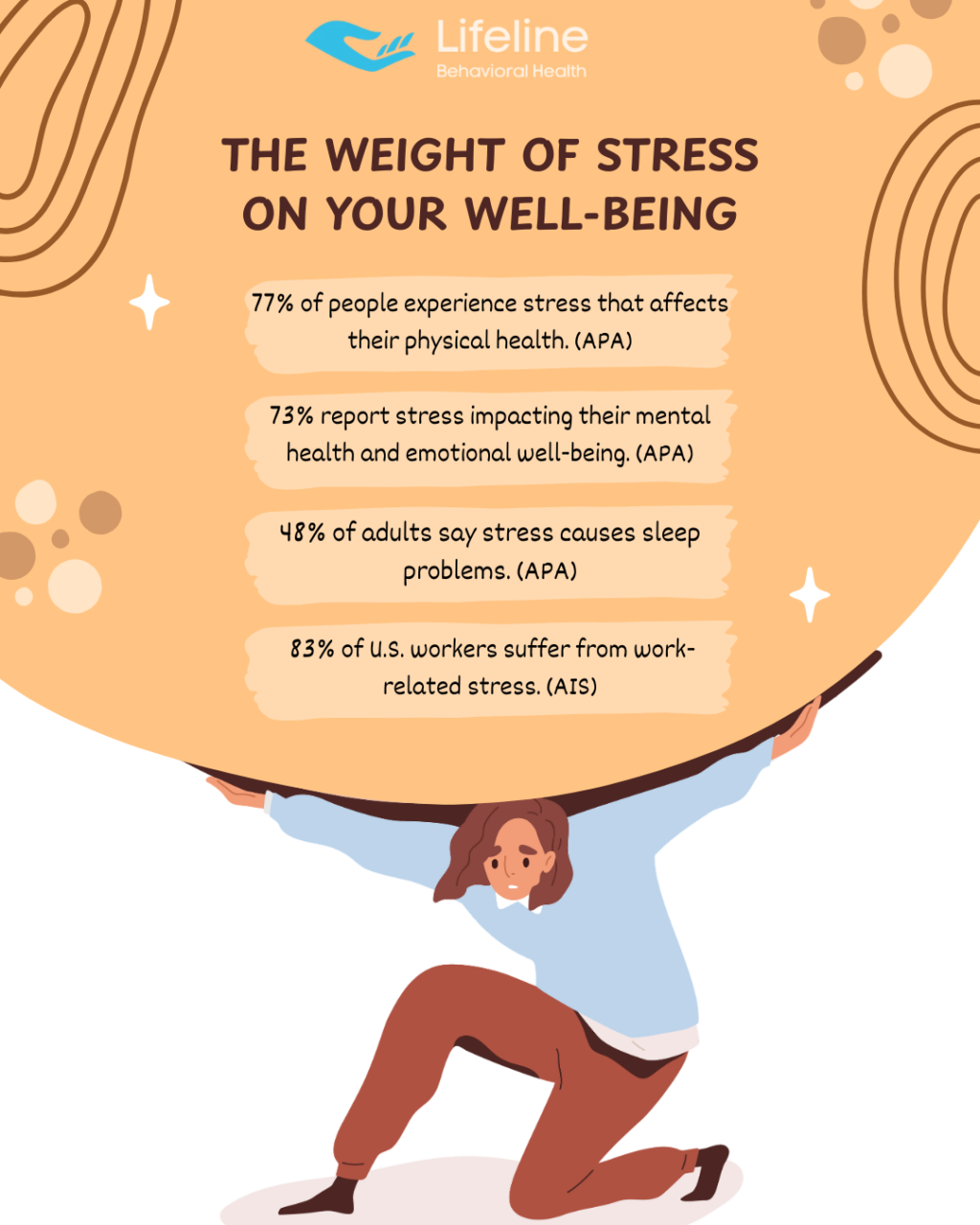
According to the American Psychological Association, nearly 77% of adults report stress affecting their physical health, while 73% say stress impacts their mental health.
Stress Awareness Month: Why It Matters
Stress Awareness Month was established in 1992 by The Health Resource Network to increase public understanding of stress and its effects on health.
The goal is to help people:
- Recognize the signs of stress
- Learn healthier coping strategies
- Reduce stigma around mental health support
- Connect individuals with resources and treatment
For many people, Stress Awareness Month becomes the moment they realize that what they have been experiencing may not simply be “being busy” or “having a rough week.”
Instead, it may be chronic stress that deserves attention and care.
How Stress Affects Your Body
Stress does not remain only in your thoughts. It affects your entire body and nervous system.
When stress becomes chronic, it can influence multiple systems within your body, including your brain, hormones, immune system, and cardiovascular health.
Many people begin noticing symptoms such as sleep disruption, fatigue, headaches, digestive issues, muscle tension, or difficulty concentrating. These physical signals are your body’s way of communicating that it has been in survival mode for too long.
Research from Harvard Medical School notes that prolonged stress hormone exposure can affect memory, immune response, and cardiovascular health.
Stress Statistics: The Weight of Stress
The impact of stress is widespread. Research from national health organizations shows that stress affects millions of people every day.
Where Is Stress Stored in the Body?
You may have heard the phrase “the body keeps the score.”
This idea, widely discussed in trauma research, explains how emotional stress can be reflected in physical tension and nervous system activation.
Stress often shows up in common areas of the body:
- Shoulders and neck tension
- Jaw clenching
- Chest tightness or shallow breathing
- Digestive discomfort
- Lower back tension
According to trauma researcher Dr. Bessel van der Kolk, emotional stress and trauma can remain stored in the body’s nervous system long after the stressful event has passed.
When your nervous system stays in survival mode, your body may continue responding as though the threat is still present.
This is one reason therapy often focuses on helping your nervous system learn how to return to a state of safety and regulation.
Stress and Mental Health Disorders
Stress does not only create temporary discomfort. It can also contribute to or worsen many mental health conditions.
Anxiety Disorders
Stress frequently fuels anxiety. When your nervous system stays in a heightened state, it can lead to persistent worry, panic attacks, and difficulty relaxing.
Depression
Long-term stress can contribute to emotional exhaustion and feelings of hopelessness. According to the National Institute of Mental Health, chronic stress is a common risk factor for depression.
Trauma and PTSD
When stress becomes overwhelming or prolonged, the brain may process the experience as trauma. Trauma responses can include hypervigilance, emotional numbness, sleep disruption, and avoidance behaviors.
ADHD
Stress can worsen ADHD symptoms by increasing distractibility, emotional overwhelm, and difficulty organizing tasks.
OCD
Stress often intensifies intrusive thoughts and compulsive behaviors. Many individuals notice OCD symptoms worsen during periods of high stress.
Bipolar Disorder
Stressful life events can trigger mood episodes for individuals with bipolar disorder, making stability more difficult without appropriate treatment.
Signs Stress May Be Affecting Your Life
Sometimes stress builds gradually until it begins affecting multiple areas of your life.
You might notice persistent fatigue, difficulty sleeping, or feeling emotionally drained even after resting. Small tasks may begin to feel overwhelming, and you may find yourself feeling more irritable or disconnected from the people around you.
Many individuals also experience difficulty concentrating, memory problems, or a sense that their motivation has disappeared. These experiences are common signs that stress may be moving beyond everyday pressure and starting to affect your overall well-being.
Recognizing these signs early can help you take steps toward restoring balance before stress becomes more severe.
You Are Not Meant to Carry Stress Alone
One of the most important messages of Stress Awareness Month is that you do not have to manage stress entirely on your own.
Many people delay seeking help because they believe their stress is not serious enough for therapy. In reality, therapy is not only for crisis situations. It can provide guidance, structure, and relief before stress becomes overwhelming.
When you speak with a mental health professional, you gain a safe space to understand what you are experiencing and develop strategies that support long-term well-being.
How Therapy Helps Reduce Stress
Counseling provides practical tools to understand and manage stress more effectively.
Therapy can help you:
- Identify the root causes of stress
- Develop healthier coping strategies
- Improve emotional regulation
- Process trauma or difficult life experiences
- Restore balance in daily life
The National Institute of Mental Health notes that psychotherapy is one of the most effective treatments for many stress-related mental health conditions.
When stress is addressed at its root, many physical and emotional symptoms begin to improve.
Flexible Mental Health Support That Fits Your Life
Finding time for therapy can sometimes feel like another stressor. Between work, family responsibilities, and daily obligations, scheduling appointments may feel difficult.
This is why telehealth mental health services have become an important option for many individuals.

Telehealth allows you to meet with a therapist from the comfort of your home, reducing travel time and scheduling barriers. Many people find that this flexibility makes it much easier to start therapy and continue attending sessions consistently.
For individuals experiencing stress, anxiety, depression, trauma, or other mental health challenges, telehealth can make accessing support significantly easier.
Stress Awareness Month Is a Reminder That Change Is Possible
Stress can feel heavy and overwhelming, especially when it has been building for a long time. It can affect your energy, your relationships, and your sense of control over daily life.
But stress does not have to define your future.
With the right support, your nervous system can calm, your thoughts can slow down, and your body can begin to recover from the constant pressure it has been carrying.
Stress Awareness Month serves as a reminder that recognizing stress is the first step toward healing and balance.
If Stress Is Affecting Your Life, Support Is Available
If stress is impacting your sleep, mood, focus, or relationships, you do not have to navigate it alone.
At Lifeline Behavioral Health, professional counseling can help you understand what your body and mind are experiencing and guide you toward practical solutions that restore stability and peace of mind.
With multiple treatment options available, including in-person counseling and telehealth services, Lifeline Behavioral Health makes it easier to access support that fits your life and schedule.
Taking the first step toward therapy may be one of the most powerful ways to reduce stress, improve your well-being, and begin feeling more balanced again.
Frequently Asked Questions About Stress
What is Stress Awareness Month?
Stress Awareness Month takes place every April and focuses on increasing understanding of stress and its impact on mental and physical health.
Can stress cause physical symptoms?
Yes. Stress can affect digestion, sleep, muscle tension, immune function, heart rate, and many other physical systems.
Can stress lead to mental health disorders?
Chronic stress can contribute to anxiety, depression, trauma responses, and worsening symptoms of ADHD and OCD.
Is therapy effective for stress?
Yes. Therapy helps identify stress triggers, regulate the nervous system, and develop healthier coping strategies.
Is telehealth therapy effective?
Research shows telehealth therapy can be just as effective as in-person therapy for many mental health conditions while offering greater flexibility.
Sources
- American Psychological Association – Stress in America Report
- National Institute of Mental Health – Stress and Mental Health
- Harvard Medical School – Understanding the Stress Response
- Van der Kolk, B. (2014). The Body Keeps the Score